
So What Is AEO Anyway, and Why Should Brands Care?
A Conversation with Christy Nolan
By Calvin Scharffs
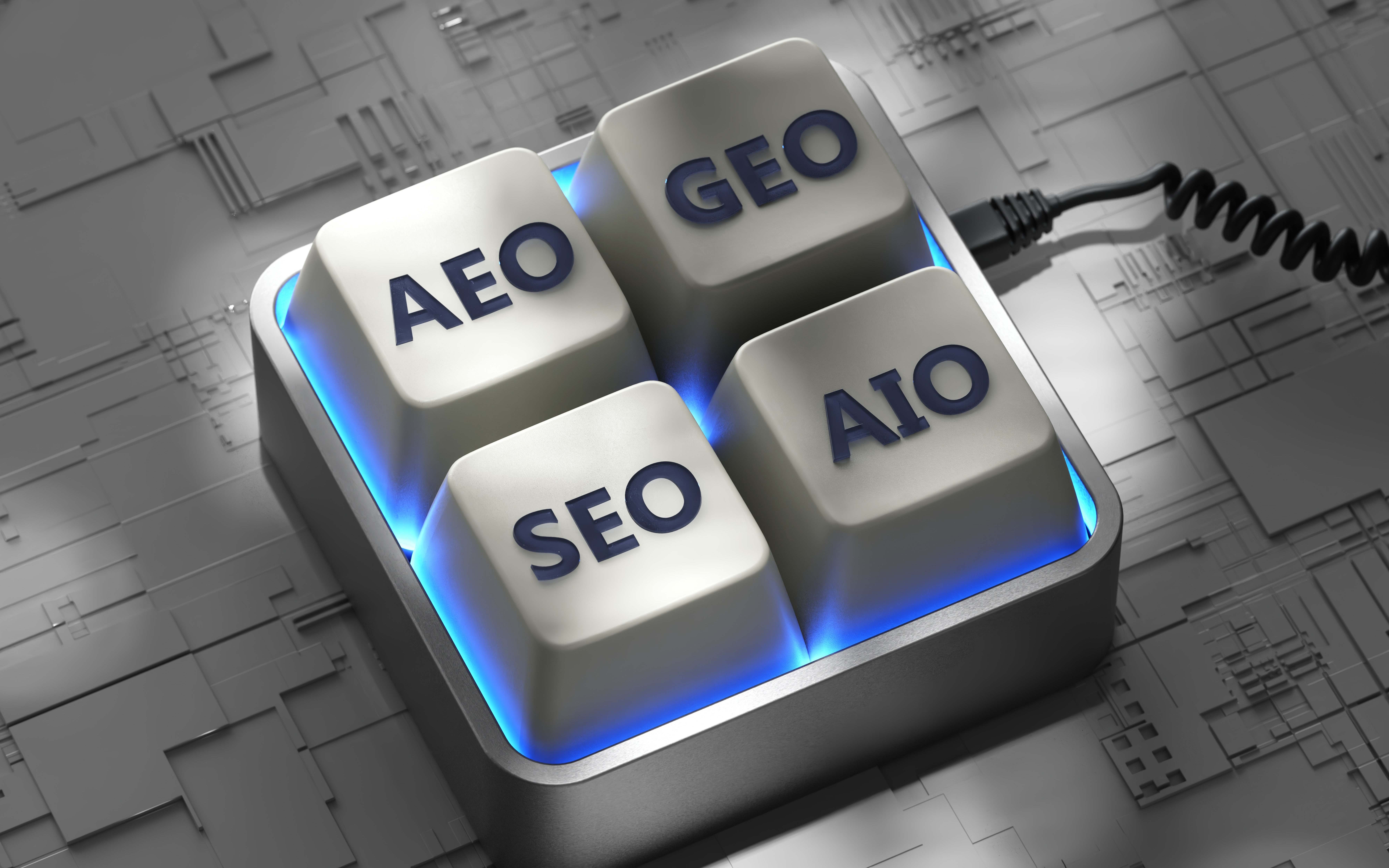
A year ago, everyone was talking about GEO. It felt like the next big thing because it was. We finally had a way to help AI engines understand who brands are, what they offer, and how they fit into the broader landscape online. GEO gave structure to the web at a time when AI tools were improving at reading it.
But then something interesting happened. Users started choosing their own AI tools and using them for almost everything. Some people rely on Perplexity to research purchases. Others use ChatGPT to plan travel. Some mix and match depending on the task. That shift made it clear that understanding your brand was only half the equation. The other half is how well these tools can use your content to answer real questions.
This is where answer engine optimization (AEO) comes in, and in many ways, it’s leveling the playing field for brands. To learn more about this emerging discipline and why it matters now, I sat down with Christy Nolan, VP of Delivery Solutions at Digital Direct Holdings.
CS: Let’s start with the basics. What is answer engine optimization, otherwise known as AEO?
CN: Think of AEO as the layer that helps every AI engine use your content. GEO teaches AI who you are. AEO teaches AI how to talk about you. It is the practice of shaping your content so a tool like ChatGPT, Perplexity, or Claude can lift a clean, confident answer straight from your site and give it to a user.
It is not about ranking or keywords in the old SEO sense. It is about clarity, structure, and intent. If your answers are short, self-contained, and easy to reuse, every engine can work with them. AEO is how you show up, no matter which tool your next customer chooses.
CS: Large language models are built to understand whatever people type in, so why does it matter which tool a prospect or customer uses?
CN: They may all be large language models, but they don’t crawl or interpret content the same way traditional search engines do, and they definitely do not behave the same way as one another. For instance, Google still indexes pages at scale, while Perplexity leans heavily on live retrieval and clean entity structure. ChatGPT blends retrieval with its internal understanding of your brand and the problems you solve. Each tool pulls slightly different signals from your site, which means the quality of your answers can vary depending on how clearly that content is written.
CS: So it’s not like the days of traditional search, where more or less one strategy works for all or most users?
CN: No, this is where the user suddenly has all the power. You no longer control which tool a potential customer will use. They might ask ChatGPT. They might ask Perplexity or Claude. They might ask an agent you have never heard of yet. It’s not feasible to customize content for every tool, but fortunately, you don’t need to. AEO gives you a way to write answers that any engine can parse quickly, trust enough to reuse, and pass directly to the user. Adopting an AEO strategy is the most reliable way to show up everywhere your customers already are.
CS: How does answer-based content fit into all of this?
CN: Answer-based content is really the hands-on part of AEO. It takes all the ideas we just talked about and turns them into something an AI tool can actually use. Think of it this way: if AEO is the strategy, answer-based content is the thing the engines pick up and pass along to the user.
What this looks like in practice. The goal is to write website content the way people ask questions, so think short, clear, self-contained answers. If an AI tool needs to parse through multiple paragraphs to find the one sentence that matters, it will likely skip your site, and your brand will be out of consideration. But short, concise answers mean every AI engine can understand your brand quickly, even though they all work a little differently behind the scenes.
CS: So, answer-based content becomes the common language?
CN: Exactly! It’s a format that can travel well across ChatGPT, Perplexity, Claude, or anything new that comes along. And that’s the whole point. We can’t predict which tool a customer will use, so we need to create content that works across all tools.
CS: Can you give me an example of what answer-based content looks like in practice?
CN: Sure. Let's use a real example from my work in the residential energy space. Imagine someone asks ChatGPT, 'What's the best solar provider in Texas for homeowners?'
A tool like ChatGPT or Perplexity will scan multiple energy company sites, but it will only pull in clear, self-contained answers. If Clean Choice Energy has a paragraph that says: 'Texas homeowners typically save $1,200-$1,800 annually with our residential solar plans. Our plans include free installation, no upfront costs, and 24/7 monitoring. Most homes qualify if your roof gets 4+ hours of direct sunlight daily; that's exactly what an AI engine can work with.
That block answers the question directly, includes the information a customer needs for decision-making, and makes it easy for the AI to cite your brand as a viable option. Meanwhile, if your competitor's site just says, 'We offer comprehensive solar solutions for residential customers, that's too vague.
That little block is doing a lot of work. It answers the question directly, it’s easy for any AI tool to reuse, and it raises the chances that your brand becomes part of the final answer the user sees. AI will always look at multiple sites, but clear, concise answers make your site one of the easiest ones to use.
CS: You mentioned that each AI engine retrieves information a little differently. Can you walk through what that means in practice?
CN: Absolutely. This is one of the areas where people get confused because all these tools look similar on the surface, but they behave quite differently behind the scenes.
Let’s start with Perplexity. Perplexity is the most “search‑like” of the bunch. It routinely goes out to the web, hits live URLs, and pulls in clear, well‑structured information that is easy to quote. When your content is straightforward and clean, Perplexity can often surface and reuse it very quickly.
ChatGPT behaves differently. Based on testing across multiple client sites, we've seen it respond best to content structured like direct Q&A. It seems to evaluate 'Does this answer solve the user's specific problem?' rather than 'Is this page ranking for keywords?' So when we optimized Clean Choice Energy's FAQ content to directly answer 'How much does solar cost?' with specific numbers and qualifying criteria, we saw that the content was getting cited more frequently.
Claude tends to be more conservative in what it surfaces—it favors sources that cite specifics, include proper context, and avoid marketing fluff. In our testing, vague benefit statements like 'industry-leading service' get passed over, while concrete statements like 'average response time under 2 hours' get picked up consistently.
So when we say each engine retrieves information a little differently, what we really mean is this: the more precise and more self-contained your answer is, the more engines can work with it, no matter how they operate. Clean, well‑labeled structure travels well. That’s why answer‑based content is the safest way to show up consistently across all of them.
CS: So what can brands do right now to get started with AEO?
CN: In our high-performing digital marketing campaigns, we're seeing 15-20% of qualified traffic now coming from AI-assisted searches rather than traditional Google. That number is climbing fast. If your content isn't structured for these engines, you're essentially invisible to a growing segment of your market. And unlike traditional SEO, where you might rank on page two and still get some traffic, with AI there's no page two. You're either cited as an option or you're not.
So when I talk about getting started with AEO, I'm not talking about a nice-to-have marketing initiative. I'm talking about protecting your share of voice as search behavior fundamentally changes.
The good news is you don’t need to overhaul your whole website to get started. AEO begins with a few simple habits that make your content easier for every AI engine to understand.
The first step is to look at the questions people actually ask about your brand. Not keywords or search volume charts, but real questions. If you have a chatbot, pull the last 90 days of conversation logs. If you have a sales team, record their most common responses to objections. If you're running Paid Search, look at your actual search query reports, not the keyword lists your agency generated.
I did this exercise with a client in the financial services space. Their 'Products' page had generic descriptions of loan types. But the chatbot logs showed customers asking:
- 'Can I get approved with a 680 credit score?'
- 'What's the actual monthly payment on a $300K loan?' 'How long does approval take?'
We restructured their content around those exact questions with specific, quotable answers. Within 60 days, they started showing up in Claude and ChatGPT responses where they'd been completely absent before.
The goal isn't to rewrite your entire site overnight. Pick five to seven high-intent questions that drive actual revenue. Build tight, factual answers around them. Test whether AI engines are starting to surface your content. Then expand from there.
Next, look at the pages you already have and think about how to shape the content so it behaves like an answer. That might mean adding a small Q&A block right on the page. Other times, it’s as simple as rewriting a paragraph to be short, direct, and self-contained. The goal is to make it easy for an AI tool to lift a paragraph and use it without guessing what you meant. Even updating a few key sections can make a noticeable difference.
Another quick win is tightening up your entity definitions. Make sure your brand, services, locations, and core offerings are described clearly and consistently. This helps every AI engine understand who you are before it tries to understand what you say.
And finally, start small. Pick a handful of high-intent questions and build crisp, helpful answers around them. Once you see how well that works, you can expand the approach across your site. The goal isn’t perfection, it’s clarity. Clarity travels well, and clarity is what engines trust.
CS: One last question. Can AI chatbots help brands figure out what customers are really asking about them?
CN: Absolutely. This is something brands don’t always realize. A good AI chatbot does more than answer questions on your site. It also shows you important intent patterns. You can see what people keep asking, where they get stuck, what they misunderstand, and what they wish you explained more clearly.
Those insights are gold for AEO. They give you a real list of the questions people care about, written in their own language. And once you know those questions, you can build clear, self-contained answers right into your site. That content helps your customers in the moment and allows AI tools to reuse your answers when someone asks the same question via ChatGPT or Perplexity.
So yes, chatbots are a great way to listen at scale. They help you understand intent, and intent is what answer-based content is built on.